
Boating offers an incredible opportunity to explore the water, enjoy scenic coastlines, and spend quality time with family and friends. While daytime boating has its own appeal, being on the water after sunset can create an entirely different experience. With the right lighting, boat owners can transform their vessels into visually striking, comfortable, and inviting spaces for nighttime cruising, fishing, and relaxing at the marina.
One of the most popular upgrades for modern boats and yachts is marine underwater lights. Installed below the waterline, these specialized lighting systems illuminate the water surrounding a vessel, creating a beautiful glow while adding practical benefits for boat owners. From enhancing your boat’s appearance to supporting nighttime fishing activities, underwater lighting offers several advantages when selected and installed correctly.
For boat owners looking to upgrade their vessels, Marine Lighting Palm Beach offers marine underwater lighting solutions designed to complement different boat styles and boating needs. Whether you own a fishing boat, a center console, a cruiser, or a luxury yacht, understanding how underwater lighting works can help you make an informed decision.
In this article, we explore the benefits of marine underwater lights, the available lighting options, important installation considerations, and how this upgrade can enhance your overall boating experience.
What Are Marine Underwater Lights?
Marine underwater lights are specialized fixtures designed to operate beneath the waterline of a boat or yacht. Unlike conventional deck lights or navigation lights, these fixtures illuminate the water around the hull rather than the boat’s interior or exterior surfaces.
Most modern systems use LED technology because it offers efficient power consumption, a long operating life, and a wide range of color options. Depending on the fixture, boat owners can choose between fixed-color illumination, dual-color systems, or advanced RGBW lights that provide multiple colors and customizable effects.
Underwater lighting is commonly installed on the transom, stern, or other suitable locations specified by the manufacturer. The appropriate placement depends on the vessel’s hull design, mounting requirements, and intended use.
Marine underwater lights are particularly popular among boat owners in coastal areas such as Palm Beach, Florida, where boating, fishing, and waterfront entertainment are important parts of the local lifestyle.
1. Enhance Your Boat’s Appearance After Sunset
One of the most noticeable benefits of marine underwater lights is the dramatic improvement they can make to a boat’s appearance at night.
When the sun goes down, underwater LED lights create a vibrant glow beneath the hull. Depending on the selected color and lighting arrangement, the effect can range from a subtle, elegant blue illumination to a bold, multicolored display.
This visual enhancement is especially appealing to yacht owners and recreational boaters who enjoy spending evenings at marinas, waterfront restaurants, and popular gathering spots.
Create a Premium Look
Underwater lighting can make a vessel look more refined and distinctive. A carefully planned lighting arrangement highlights the boat’s profile and creates an attractive reflection on the surrounding water.
For luxury yachts, coordinated lighting can complement existing deck, cockpit, and accent lights. For smaller recreational boats, even a simple underwater LED setup can deliver a noticeable visual improvement.
Marine Lighting Palm Beach helps boat owners explore lighting options that complement their vessel’s design and personal preferences.
Personalize Your Lighting Experience
Color-changing marine LED underwater lights allow boat owners to customize the atmosphere for different occasions. A relaxing evening on the water may call for a softer color scheme, while a social gathering at the dock may benefit from a more vibrant appearance.
The key is to select lighting that complements the vessel without creating unnecessary glare or disturbing other boaters.
2. Improve Your Nighttime Boating Experience
Nighttime boating can be enjoyable, but it also requires greater awareness of your surroundings. Underwater lighting can help illuminate the water immediately around a stationary or slowly moving vessel, making the area near the hull easier to observe.
For example, when a boat is anchored in suitable conditions or secured at a marina, underwater lights can reveal movement and activity near the transom. This additional visual information may help boaters understand what is happening around their vessel.
Make Time at the Marina More Enjoyable
A well-lit boat creates an inviting atmosphere for evening relaxation. Whether you are enjoying a quiet night at the dock or entertaining guests aboard your yacht, underwater lighting can make the surrounding water part of the experience.
It can also enhance the appearance of a swim platform or stern area when the vessel is stationary, provided the lighting arrangement is suitable for the location.
Understand the Limits of Underwater Visibility
Although underwater lights illuminate the water around a boat, they should not be treated as a substitute for navigation equipment. Water clarity, depth, suspended particles, waves, and ambient light all affect how far the light travels.
Underwater lights also do not replace required navigation lights, radar, lookout practices, or other safety equipment. Safe nighttime navigation still depends on proper training, suitable equipment, and compliance with applicable boating regulations.
3. Support Nighttime Fishing Activities
Fishing enthusiasts are another group that can benefit from marine underwater lights. Many anglers use underwater lighting to create an illuminated area around their boats or near suitable fishing locations after dark.
Light can attract small organisms and baitfish under certain environmental conditions. These organisms may attract larger fish, creating opportunities for anglers to observe and fish around the illuminated area.
Create an Attractive Fishing Environment
Green and blue underwater lights are popular choices for recreational fishing, although performance varies with water clarity, local conditions, and the species being targeted.
A suitable underwater lighting system can make it easier to observe activity near the boat and may help anglers identify promising fishing areas. However, fish attraction is not guaranteed, and results vary according to location, season, current, and natural feeding patterns.
Choose Lights for Your Fishing Style
Anglers should consider the type of fishing they regularly do before selecting a lighting system.
For occasional evening fishing, a straightforward LED underwater light may provide sufficient illumination. More frequent anglers may prefer higher-output fixtures, multiple mounting positions, or systems with specialized operating modes.
Marine Lighting Palm Beach provides underwater lighting options for recreational boaters and fishing enthusiasts who want to balance functionality, durability, and visual appeal.
4. Benefit From Energy-Efficient LED Technology
Power consumption is an important consideration for any boat accessory. Electrical systems must support lighting, navigation equipment, electronics, pumps, and other onboard devices without placing unnecessary demands on the battery.
Marine LED underwater lights offer an efficient lighting option for many recreational vessels.
Lower Power Consumption
LEDs generally consume less electricity than comparable traditional incandescent lighting systems. This can help reduce the energy required to operate onboard lights, although actual savings depend on fixture output, the number of lights installed, and how long they remain switched on.
For boat owners who regularly spend time at anchor or away from shore power, efficient lighting can be particularly valuable.
Long Operating Life
Quality marine LEDs are designed for extended operation. Their lifespan can reduce the frequency of bulb replacement and routine maintenance compared with some traditional lighting technologies.
However, overall service life depends on the fixture’s construction, operating temperature, electrical conditions, installation quality, and exposure to the marine environment.
When comparing underwater boat lights, look beyond brightness alone. Consider manufacturer specifications, electrical compatibility, warranty coverage, and suitability for continuous underwater operation.
5. Choose From Different Underwater Lighting Options
Not every boat requires the same type of underwater lighting. Hull construction, vessel size, budget, and intended use all influence the best choice.
Understanding the main mounting styles and lighting technologies can help you select a system that meets your requirements.
Surface-Mounted Underwater Lights
Surface-mounted fixtures attach to an appropriate exterior surface of the hull. Depending on the design, they can be a practical option for certain retrofits and new installations.
Potential advantages include a relatively compact profile and compatibility with a range of recreational vessels.
However, mounting location and cable routing must follow the manufacturer’s instructions. The installation must also account for the hull material, sealing requirements, and exposure to water.
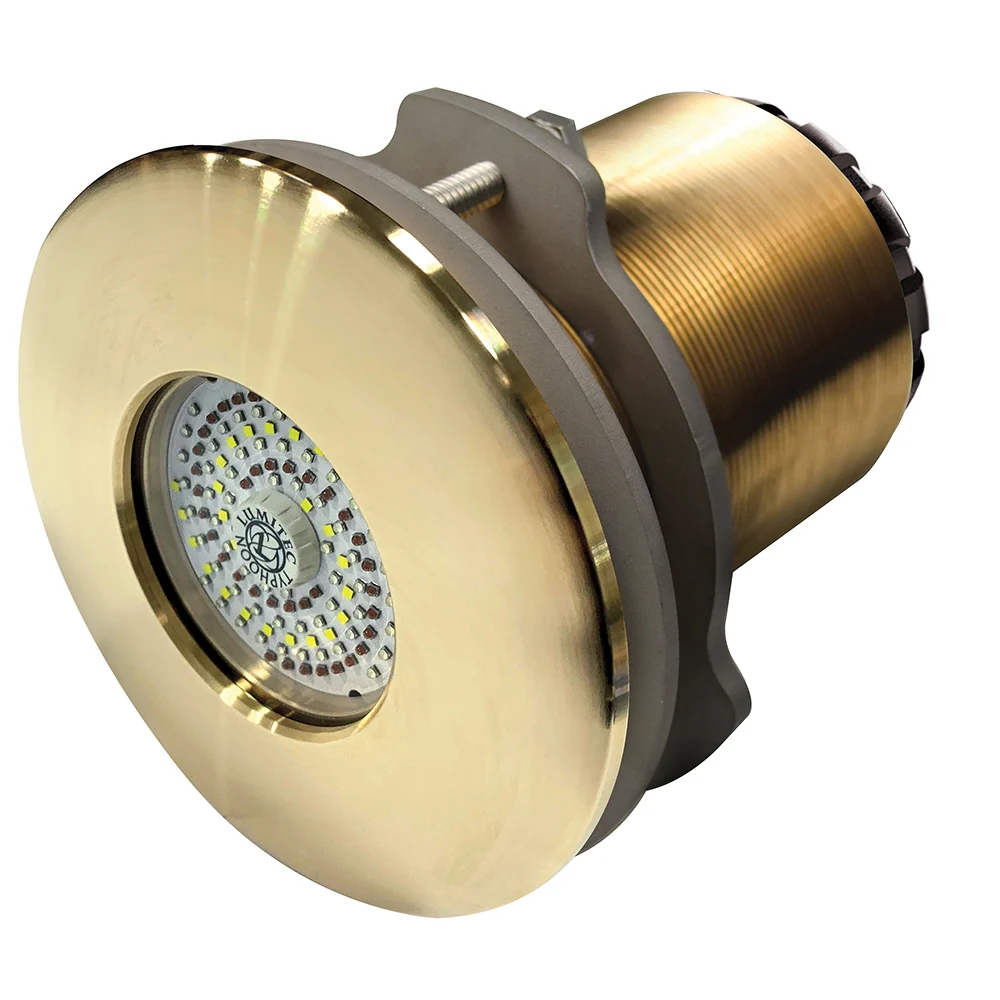
Through-Hull Underwater Lights
Through-hull systems are designed to integrate through a suitable opening in the hull. Some models offer powerful illumination and a streamlined appearance.
Because this mounting method involves a hull penetration below or near the waterline, careful installation is essential. Incorrect fitting or sealing can result in water intrusion and potentially serious vessel damage.
Professional assessment is recommended, particularly for larger boats, expensive yachts, and installations involving complex hull structures.
RGBW Color-Changing Lights
RGBW lighting systems combine red, green, blue, and white light sources to provide a broad range of colors and lighting effects.
Depending on the model, users may be able to change colors, adjust brightness, or select preset modes through a compatible controller.
These systems are popular with boat owners who want to coordinate underwater illumination with other decorative lighting aboard their vessels.
High-Output LED Systems
High-output underwater LEDs can be appropriate for larger vessels or boat owners seeking more intense illumination. When comparing products, review the manufacturer’s lumen ratings, beam angle, mounting requirements, and intended operating conditions.
Remember that a higher lumen rating does not automatically guarantee better underwater visibility. Water clarity, beam distribution, fixture placement, and the color of the light also influence the final result.
6. Improve Your Boat’s Appeal for Entertaining
For many boat owners, boating is as much about social experiences as it is about traveling across the water. Underwater lighting can help create a more inviting setting for evening gatherings, celebrations, and relaxed nights at the marina.
Create an Attractive Social Space
A boat with coordinated lighting can provide a memorable setting for entertaining friends and family. Underwater illumination complements cockpit lighting, deck accents, and other decorative features to create a cohesive appearance.
A restrained lighting arrangement often works best. Combining underwater lights with appropriate deck or courtesy lighting can create visual depth without making the boat excessively bright.
Complement Luxury Yacht Design
On larger vessels, lighting can be planned as part of a broader design approach. Matching the underwater light color with selected exterior accents can give the boat a consistent, polished appearance.
Marine Lighting Palm Beach can help boat owners explore lighting solutions that suit their vessel’s layout and preferred style.
7. Consider Durability in Saltwater Environments
Marine lighting fixtures face demanding conditions. Saltwater exposure, humidity, temperature changes, vibration, and prolonged immersion can affect components that are not designed specifically for marine applications.
For this reason, selecting marine-grade underwater lights is essential.
Look for Marine-Suitable Materials
Corrosion-resistant housings, suitable seals, durable lenses, and appropriately protected electrical connections are important features to evaluate.
The exact materials should be compatible with the boat’s construction and the manufacturer’s installation requirements. For example, not every metal fixture is appropriate for every hull material or installation location.
Check Waterproofing Specifications
Underwater lights must be rated for their intended depth and operating conditions. Review the manufacturer’s immersion rating and installation instructions rather than assuming that a fixture marketed as waterproof is suitable for permanent underwater use.
Professional installation also helps ensure that wiring, connections, mounting surfaces, and seals are suitable for the marine environment.
These considerations are especially relevant for boat owners in Palm Beach, where saltwater exposure and frequent use can place additional demands on marine equipment.
8. Why Professional Installation Matters
Selecting quality underwater lights is only one part of a successful upgrade. Correct installation is equally important for reliability, electrical safety, and long-term performance.
Proper Placement and Coverage
The number and position of fixtures affect how evenly the water is illuminated. A suitable arrangement depends on the boat’s width, transom shape, hull construction, and desired lighting effect.
An experienced installer can assess these factors and recommend a practical configuration.
Safe Electrical Connections
Marine electrical installations require suitable wiring, circuit protection, waterproof connections, and compatibility with the vessel’s power system.
Incorrect wiring or inadequate protection can cause equipment failure and create safety risks. Installers should follow the fixture manufacturer’s instructions and applicable marine electrical standards.
Protecting the Hull
Any installation that involves drilling or penetrating the hull requires particular care. The installer must determine whether the proposed location is appropriate and ensure that the fitting is sealed correctly.
This is one reason many boat owners choose professional marine lighting installation instead of attempting complex underwater lighting work themselves.
Marine Lighting Palm Beach offers marine underwater lighting solutions and installation services for boat owners seeking a professionally planned upgrade.
9. How to Maintain Your Marine Underwater Lights
Routine maintenance can help keep underwater lighting systems operating properly and identify potential problems before they become more serious.
Consider the following practices:
- Inspect the fixtures regularly: Look for visible damage, loose mounting hardware, or signs of corrosion.
- Check electrical connections: Have damaged wiring, deteriorating seals, or signs of water intrusion assessed promptly.
- Clean the lenses appropriately: Follow the manufacturer’s cleaning instructions to remove marine growth, salt residue, and surface deposits.
- Monitor lighting performance: Changes in brightness, flickering, or intermittent operation may indicate an electrical or fixture problem.
- Follow service recommendations: Use approved replacement parts and observe the manufacturer’s maintenance schedule.
Never enter the water to inspect underwater lights unless conditions are safe and the vessel’s electrical systems have been handled appropriately. For installations involving through-hull fixtures or suspected leaks, seek qualified marine service assistance.
10. How to Choose the Right Marine Underwater Lights
Before investing in an underwater lighting system, evaluate how you use your boat and what you expect from the upgrade.
Start by considering these important factors:
Boat type and size: A small fishing boat may need a different configuration from a large yacht.
Primary purpose: Decide whether your main priority is appearance, recreational fishing, entertaining, or illuminating the water around a stationary vessel.
Brightness and beam angle: Compare the manufacturer’s specifications and consider how the fixtures will distribute light underwater.
Color options: Choose fixed-color, dual-color, or RGBW lighting according to your preferences and intended use.
Mounting style: Determine whether a surface-mounted or through-hull fixture is appropriate for your hull and installation requirements.
Electrical compatibility: Confirm voltage, current draw, wiring requirements, and circuit protection.
Durability and support: Look for marine-suitable construction, clear warranty terms, and access to qualified installation or maintenance services.
Taking time to compare these factors helps you avoid choosing a system based on appearance alone.
Why Choose Marine Lighting Palm Beach?
Finding the right underwater lighting system involves more than selecting a bright fixture. Boat owners need solutions that suit their vessel, boating habits, electrical setup, and exposure to local marine conditions.
Marine Lighting Palm Beach specializes in marine underwater lights and other marine lighting solutions for boat owners in Palm Beach and surrounding South Florida communities.
Whether you want to enhance your boat’s nighttime appearance, explore lighting options for recreational fishing, or upgrade an existing system, working with a marine lighting specialist can help you identify suitable products and installation requirements.
From evaluating mounting options to considering color selection and long-term durability, a well-planned lighting upgrade can complement your vessel while supporting your boating goals.
Conclusion
Marine underwater lights can transform the way you enjoy your boat after sunset. They create a distinctive visual effect, add atmosphere to evening gatherings, support certain nighttime fishing activities, and provide an additional way to observe the water immediately surrounding a stationary vessel.
Modern LED technology also offers advantages in energy efficiency, durability, and lighting flexibility. However, choosing the right system requires careful consideration of brightness, color, mounting style, electrical compatibility, and resistance to saltwater exposure.
Professional installation and regular maintenance are equally important, especially when the work involves below-waterline fittings or complex electrical connections.
For boat owners who want to combine functionality with an attractive nighttime appearance, Marine Lighting Palm Beach is a useful place to explore marine underwater lighting options and professional installation services.
With the right lighting system, your boat can become an even more enjoyable space for nighttime relaxation, fishing, and memorable experiences on the water.
See also: How AI Is Changing Advertising for Small Businesses
Frequently Asked Questions (FAQs)
1. What are the main benefits of marine underwater lights?
Marine underwater lights enhance a boat’s nighttime appearance, create an attractive atmosphere, and may support recreational fishing by attracting baitfish in suitable conditions. They also illuminate the water near a stationary vessel.
2. Are LED underwater lights suitable for saltwater boats?
Yes, provided the fixtures are specifically designed and rated for their intended marine and underwater operating conditions. Corrosion-resistant materials, suitable seals, and correct installation are important for long-term performance.
3. What color is best for underwater boat lights?
Blue and green are popular choices, while white and RGBW systems offer additional options. The best choice depends on water clarity, personal preference, fishing goals, and the manufacturer’s guidance.
4. Can underwater lights improve boating safety?
They can help illuminate the water immediately around a boat, but they do not replace required navigation lights, lookout practices, or navigation equipment. Safe operation after dark still requires proper equipment and attention to local conditions.
5. Should I hire a professional to install underwater lights?
Professional installation is strongly recommended when the work involves through-hull fittings, below-waterline penetrations, or complex electrical systems. Correct installation helps reduce the risk of leaks, corrosion, and electrical problems.
6. Where can I find marine underwater lights in Palm Beach?
Marine Lighting Palm Beach provides marine underwater lighting solutions for boat owners in Palm Beach and nearby South Florida communities. Visit its website to explore available options and installation services.