Newsletter Subscribe
Enter your email address below and subscribe to our newsletter
Enter your email address below and subscribe to our newsletter

 ByJohn A
You don’t chase the horizon because it’s easy. You chase it because it’s yours. And when the trail gets narrow, the rain turns sharp, or the washboard road rattles your teeth, you want something quietly dependable riding along with you—proof, protection, and a memory bank that doesn’t flinch. That’s where rugged gear earns its keep. Not the “looks tough on the box” kind, but the kind that stays calm when everything else is chaos.
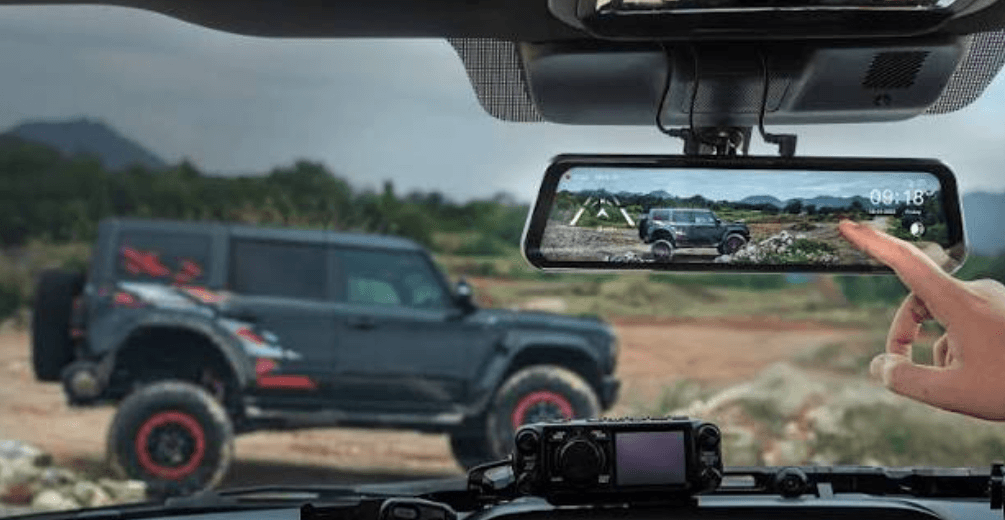
A rugged dash cam isn’t just for fender benders in a grocery-store parking lot. For you, it’s a trail witness. A storm companion. A tiny black box of truth when the story gets messy. And if you’re the kind of driver who takes the scenic route even when the GPS begs you to turn around, then choosing the right one matters more than most people realize.
“Rugged” isn’t a marketing word you can trust without receipts. For adventure driving, it needs to mean real-world resilience—heat, cold, vibration, dust, sudden downpours, and that never-ending thrum of uneven terrain.
Here’s what rugged should look like in practical terms:
– Temperature tolerance that matches your map: Desert heat can cook electronics; mountain nights can freeze them. Look for models rated for wide operating temperatures and designed to handle direct sun without warping or shutting down.
– Capacitor power instead of a standard battery: Batteries hate extreme heat and age fast. Capacitors handle temperature swings better and are often the go-to choice for off-roaders and long-haulers.
– Vibration-resistant build: On forest roads and rocky inclines, micro-shakes become constant. A truly sturdy mount and a camera body that doesn’t rattle itself into failure are non-negotiable.
– Weather and dust protection: Even if the camera sits inside the windshield, fine dust and humidity creep in. Better sealing and solid materials buy you time and reliability.
And yes—you care because you’re not just recording a commute. You’re recording a life that happens where pavement ends.
The Features You’ll Actually Use on the Trail (Not Just the Ones That Sound Fancy)
You’ve seen the spec sheets. They love big numbers and buzzwords. But on the road—especially the wild kind—you need features that show up when you need them most.
1) High-resolution video plus strong dynamic range
Resolution helps, but dynamic range is what saves you at sunrise, sunset, and in harsh glare. You want readable plates, clear trail conditions, and less “white-out sky, blacked-out road” footage.
2) Wide angle without the fishbowl effect
A wide field of view captures more of the scene, but too wide can warp edges and make distances deceptive. The sweet spot captures the shoulder, the lane, and enough context to tell the truth.
3) GPS and speed logging
If something goes sideways—literally—you’ll appreciate having location data. It’s also useful for building an honest trip record, especially when you’re documenting remote routes.
4) Loop recording and incident locking
Loop recording keeps things simple: the camera overwrites old footage when storage fills. But you also want automatic incident detection (G-sensor) that locks key clips when a sudden jolt hits.
5) Parking mode (if you leave your rig at trailheads)
Trailhead parking is its own universe. Parking mode can capture someone bumping you, checking your doors, or “accidentally” scraping your bumper while pretending not to.
And now for something that sounds small but hits hard emotionally: reliability. Because when you’re tired, muddy, and a little far from cell service, dependable gear feels like a friend.
A quick anecdote about support: you know that moment when you’re halfway into a long drive and the little things start piling up—phone loses signal, weather flips, plans change? A friend once joked that “support is just peace of mind wearing boots.” That stuck. Because on the road, support isn’t only customer service on a website. It’s knowing your equipment won’t abandon you when you’re miles from “easy.”
Essentially, even the best dash cam can fail if it’s mounted poorly or wired like an afterthought. This is where you win before the trip even starts.
A short anecdote about preparation: there’s a special kind of regret that hits when you realize, at the very start of a trip, that something simple could’ve been handled at home. Someone once packed everything for a weekend in the mountains—extra fuel, tire repair kit, snacks, layers—then discovered the camera mount was missing its adhesive pad. Suddenly the “quick install” became a scavenger hunt through tiny towns and dusty shelves. You don’t forget that lesson. Preparation isn’t perfection; it’s respect for your future self.
Here’s how you keep it clean and reliable:
– Choose the right mount: Adhesive mounts are stable; suction mounts are adjustable but can loosen with heat and vibration. For rugged travel, stability usually wins.
– Place it behind the rearview mirror: You get a clean view without blocking your sightline—and it’s less tempting for thieves.
– Hardwire for long trips: A hardwire kit reduces clutter and can enable parking mode. Just use proper fuses and routing so cables don’t interfere with airbags.
– Test before you leave: Record a short clip, check audio, confirm date/time and GPS lock, and verify the lens isn’t catching glare from your dashboard.
Think of it as a ritual: you wouldn’t hit a remote pass without checking tire pressure, so don’t roll out without checking your recording setup.
See also: Benefits of Automated Data Extraction
Adventure travel is hard on memory cards. Heat, constant rewriting, and vibration can corrupt files faster than you’d expect. That’s why storage isn’t an afterthought—it’s part of your safety plan.
You’ll want:
– High-endurance microSD cards designed for continuous recording (not bargain-bin cards meant for occasional phone photos).
– Regular formatting (every few weeks, or before big trips) to reduce file issues.
– A simple backup habit: copy key clips to your phone or laptop when you stop for the night.
Now for the third anecdote—about copasetic. There was a time when someone heard that word in an old movie and started using it on trips: “Is everything copasetic?” It became a silly checkpoint phrase at every stop—fuel, water, maps, gear, and yes, the camera. Funny how a single word can turn into a grounding routine. When things feel unpredictable, you ask the question, do a quick scan, and suddenly everything feels… copasetic again.
To keep your camera healthy, also:
– Wipe the lens gently (dust is sneaky).
– Check mount tightness after rough sections.
– Review a clip occasionally—because discovering a bad angle after a week of driving hurts.